
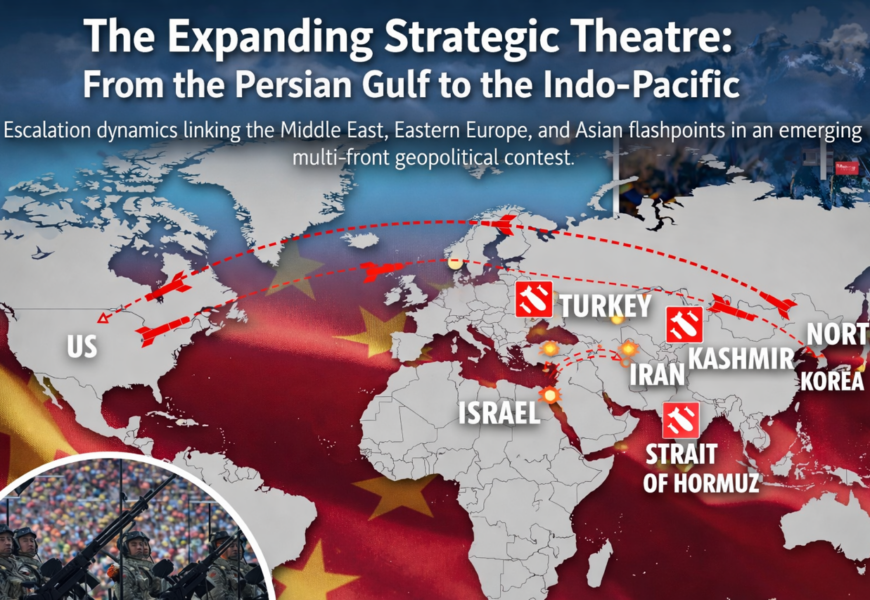
Modern conflicts rarely remain geographically confined once major powers become directly involved. When political objectives are ambiguous and escalation becomes reciprocal, wars often expand across multiple domains and regions. The current confrontation between the United States and Iran shows signs of evolving into such a multi-theater strategic contest.
Rather than remaining limited to the Middle East, recent developments suggest that the conflict’s strategic ripple effects could extend across the Indian Ocean, Eastern Europe, and key global maritime corridors.
The Indian Ocean Signal
Reports of an Iranian naval vessel being targeted in waters of the Indian Ocean illustrate how the confrontation is no longer restricted to the Persian Gulf. The broader significance of such incidents lies not merely in the tactical engagement itself but in the strategic messaging embedded within the geography of the event.
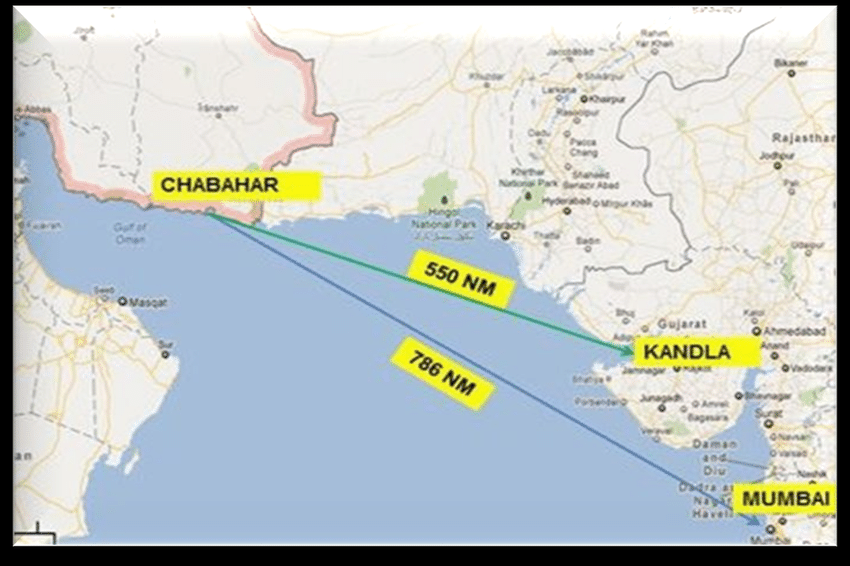
Operations in the Indian Ocean carry indirect implications for other major stakeholders, particularly China. The region sits along critical sea lines of communication connecting the Middle East with East Asia.
One of the most consequential maritime chokepoints in this system is the Strait of Malacca, through which a substantial portion of Chinese trade and energy imports flows. Any perception that the Indian Ocean security environment is becoming militarized inevitably raises questions about the resilience of these trade routes.
Regional Pressure Points
The evolving conflict may also intersect with political dynamics across South and Central Asia. Instability involving Afghanistan and Pakistan could further complicate the regional strategic environment.
India’s engagement with Afghanistan’s leadership, including interactions with the Taliban authorities, has introduced additional diplomatic channels in the region. Any perception that external actors are influencing these dynamics could feed broader strategic competition in South Asia.
Meanwhile, New Delhi’s growing strategic cooperation with Washington has strengthened its role in the Indo-Pacific security architecture.
Proxy Fronts and Asymmetric Escalation
Iran’s regional strategy has historically relied on a network of allied non-state actors capable of exerting pressure across multiple fronts. If the confrontation intensifies, Tehran may seek to expand indirect pressure through groups such as:
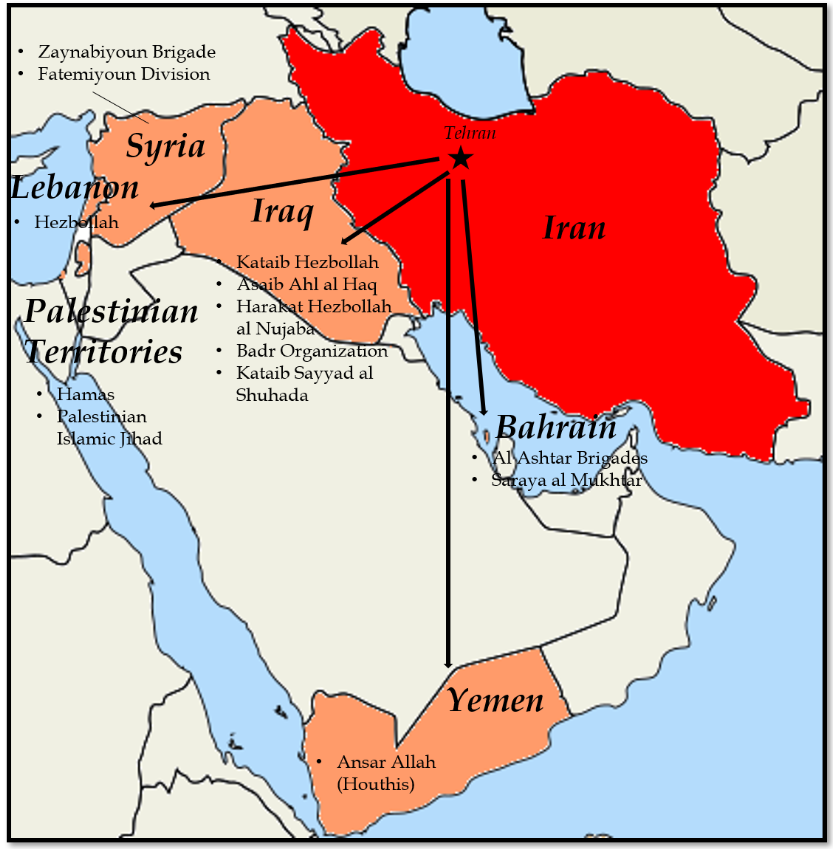
- Hezbollah in Lebanon
- Houthi movement in the Red Sea corridor
- Kurdish actors in northern Iraq and Syria
Such proxy dynamics could extend instability into maritime routes and border regions that are essential to global commerce.
European Strategic Calculations
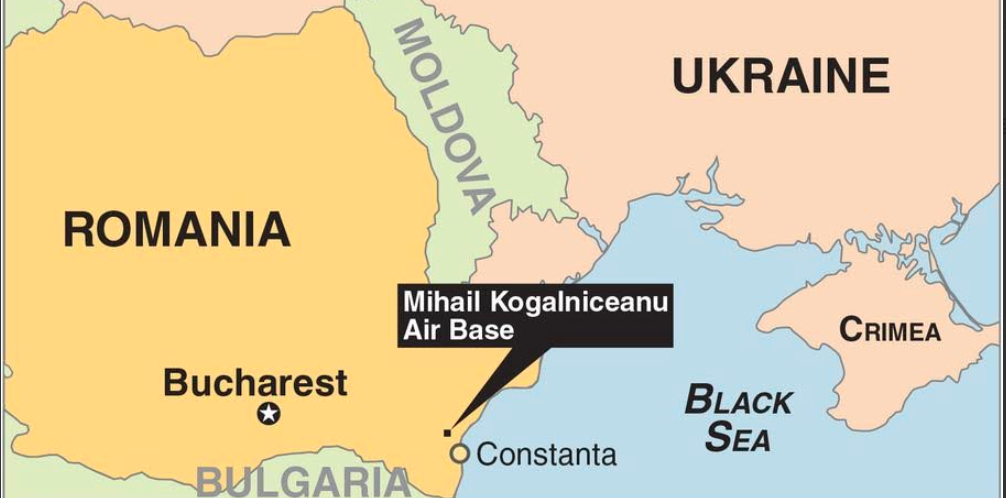
Within Europe, variations in political support among allies may influence U.S. basing decisions. If certain Western European partners adopt more cautious positions toward expanded military engagement, Washington could increasingly rely on facilities in Eastern Europe.
Countries such as Romania—which hosts important NATO infrastructure—could become more central to logistical or operational planning.
At the same time, differences among European governments, including those in Spain, reflect broader debates within the transatlantic alliance about the scale and scope of military involvement.
Strategic Logic of Expansion
From a strategic perspective, the United States may view sustained engagement as a means of reinforcing its role as a global security guarantor. Maintaining influence over key maritime corridors, alliance networks, and deterrence frameworks remains central to Washington’s broader strategic posture.
For this reason, complete disengagement from a confrontation of this magnitude appears unlikely in the near term. Instead, the conflict could gradually expand to involve additional stakeholders, either directly or indirectly.
Conclusion
The evolving U.S.–Iran confrontation increasingly resembles a complex geopolitical contest rather than a localized conflict. Maritime chokepoints, proxy networks, regional rivalries, and alliance politics are all converging within a single strategic environment.
Preventing further escalation will require renewed diplomatic engagement and clearly defined political objectives. Without such efforts, the risk remains that a regional confrontation could gradually transform into a wider geopolitical contest spanning multiple theaters.


