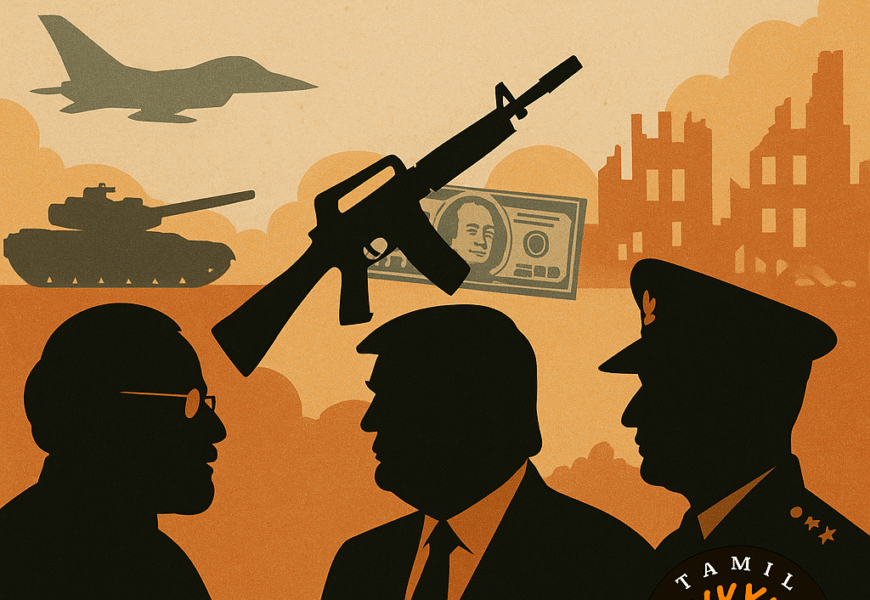
In 1999, as the chill of the Kargil conflict settled over the Himalayas, the United States moved swiftly to impose sanctions on India. The reason: New Delhi’s defiant nuclear tests the year before, which shook the carefully maintained global non-proliferation order. But the sanctions, like many in history, were more symbolic than strategic — a gesture to uphold a fading rulebook in an evolving world order.
By 2000, the sanctions were quietly revoked. The Cold War was long gone, China was rising, and the U.S. had found in India a potential counterweight — a market of over a billion people and a democracy that could be courted with military hardware and shared anxieties.
Since then, India’s arms imports surged into the billions. And each deal — from fighter jets to surveillance drones — came with diplomatic overtures, joint exercises, and a deepening of “strategic partnership.” But beneath the contracts lay a deeper pattern: the dance of nationalism, war, and weapons.
The 1999 Kargil War itself, though short and brutal, was repurposed by the ruling BJP government into an electoral spectacle. Hindutva rhetoric, cloaked in the valor of fallen soldiers, flooded the airwaves. The BJP returned to power, not just with votes, but with a mandate to define nationalism in militaristic terms.
Two decades later, in 2019, history found its echo
The Pulwama terror attack killed over 40 Indian paramilitary personnel. The nation grieved — but the Modi government saw an opportunity. Within days, Balakot airstrikes were carried out, presented as a bold retaliation. Media frenzy erupted, war cries filled the political arena, and Modi’s image as a muscular, no-nonsense leader solidified. He rode the wave of nationalistic fervor straight into re-election.
But in 2019, the escalation was checked — not by diplomacy from the West, but by then-Pakistani Prime Minister Imran Khan, who ordered the release of a captured Indian pilot and called for de-escalation. It was a rare moment of restraint in a region that rarely sees it.
Fast forward to 2025
The world was different now. The United States was no longer the unchallenged economic titan. Faced with a domestic economic meltdown, rising unemployment, and a desperate defense sector, Washington turned to its oldest reliable playbook: selling weapons to tense regions.
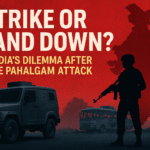
India, under Modi’s third term, was more ideologically rigid than ever. Hindutva nationalism wasn’t just a movement; it had become the core identity of the state. And in the Kashmir Valley, still reeling from years of lockdowns and silence, a new flashpoint emerged: Pahalgam.
Whispers of a planned insurgency, amplified threats, and reports of “terror camps” — some legitimate, others conveniently timed — created the perfect stage.
The U.S. offered India a massive $6.5 billion defense package — surveillance systems, artillery, upgraded F-21 jets, and cutting-edge missile tech. The narrative was clear: India needed these to defend its sovereignty in Kashmir. Modi’s government, eager to feed its base, lapped it up.
Then came the trigger. A confrontation in Pahalgam, either spontaneous or manufactured, led to a rapid spiral. Indian media exploded with coverage. Studio generals declared war inevitable. Pakistan’s military, no longer restrained by a civilian government toppled years prior, responded with equal fury. Border skirmishes escalated.
And just like that, the region teetered on the edge of full-blown war.
Washington issued bland calls for “restraint” — but behind the scenes, arms shipments flowed. The playbook hadn’t changed; it had only become more refined. Profit dressed itself in the guise of peace, and nationalism was once again weaponized — not just by India, but by its supposed allies.
“For Modi, the fires of Pahalgam weren’t just a crisis — they were a campaign.”
“For the U.S., it was just business.”
“And for South Asia, it was déjà vu with deadlier consequences.”