
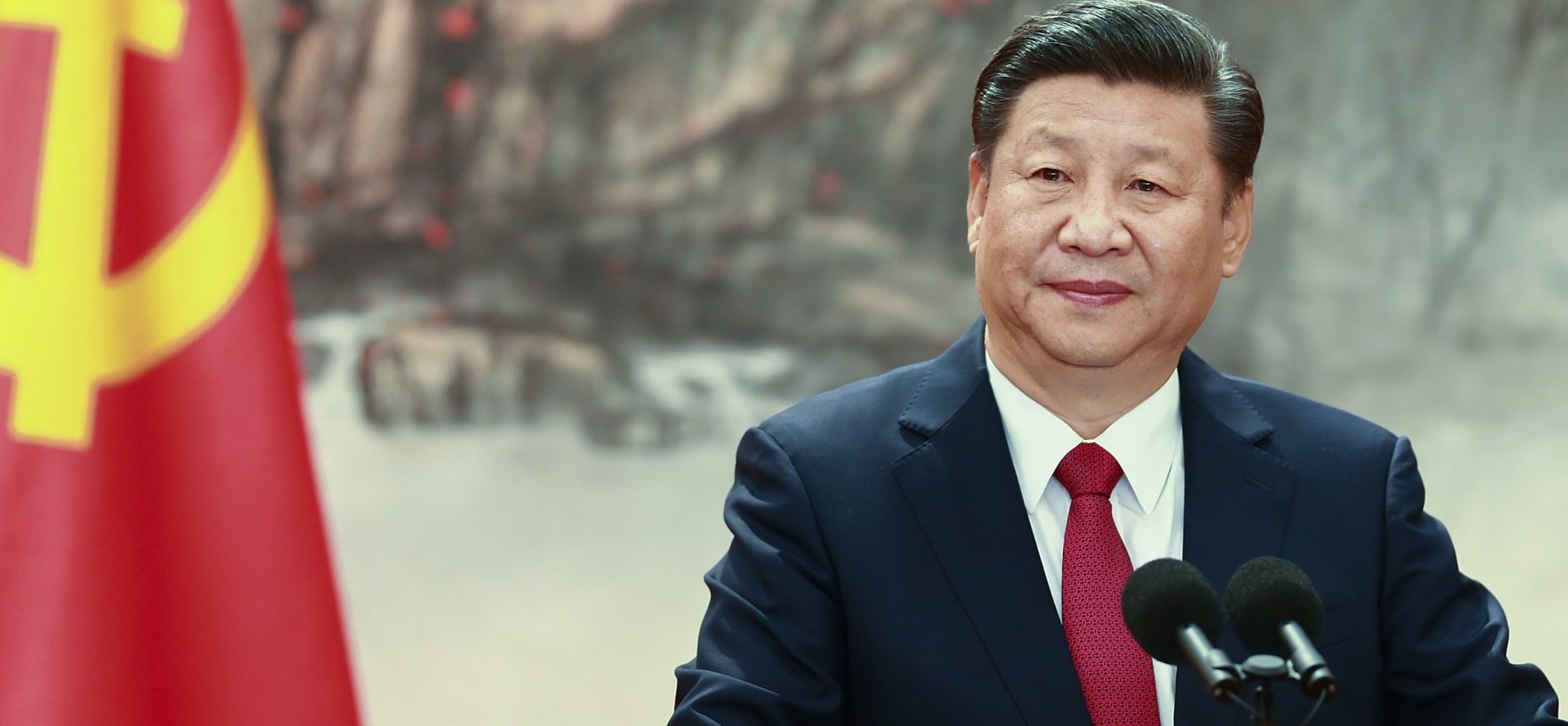
Amid various uncertainties hovering over the global economy as a result of US-China trade standoff, the Chinese President Mr. Xi Jinping’s visit to Tamil Nadu deserves a serious explication. The choice of a coastal town Mamallapuram, as his visiting place evokes a considerable interest in reiterating the pivotal role played by the coast of Tamilakam (historical name of present-day Tamil Nadu) in the history of global maritime trade in general, and a celebrated Tamil-Chinese friendly relationship in particular. Indeed, Mamallapuram is one of many such ancient port cities situated along the coast of Tamil Nadu, that played a significant role in the maritime trade across the world for countless millennia, providing a strategic importance for Tamils and their peninsular homeland. Han people, similar to Tamils, enjoy a rich and continuous history of Trade and prosperous heritage. Their glorious period was during the Han Dynasty that was contemporary to Roman Empire and Sangam Tamil period. Together, these three empires almost dominated the trade across the continents through Spice route and Silk route. Despite having a proximate land distance, the Han dynasty didn’t have a considerable bilateral trade with Roman Empire. Most of the trade between them was routed through the Tamil ports, showing their proclivity towards the trade networks of Tamil Merchants. With the fall of these three empires subsequently around the same time in history, the relationship between Tamils and Chinese stagnated until the emergence of the world’s first trans-oceanic Maritime Empire of Cholas in the medieval era. The Chola empire reached its zenith under emperor Raja Raja Cholan and his son Rajendra Cholan. Arguably Rajendra Cholan was the most powerful emperor of South Asia since the Sangam era. His navy’s momentous conquest of the Malay peninsula for destabilizing the Srivijaya empire was intended for the restoration of friendly relationship with Chinese, as the Srivijaya empire was rankling the trade between Tamils and Chinese using its geostrategic location in the maritime trade route. The unprecedented victories achieved by the navy of Cholas were the manifestations of the transfer of knowledge about ship building technologies for several generations across time. Couple of centuries later, a Chinese diplomat named Zheng He embarked on a voyage along the Indian ocean till African coasts. He installed a Trilingual stone tablet in the island of Eelam. The languages inscribed were Tamil, Chinese, and Persian. This proclaimed the fact that Chinese held friendly relations with Tamils in high esteem and identified Tamils, Chinese and Arabs as the three economic powers of this region. The colossal size of ships in which Zheng He embarked on his mission showed the technological advancements of Chinese ships at a time when Europeans reached the subcontinent sailing on their relatively rudimentary boats. This trade paradigm faced its decline in the following years which culminated with the fall of Constantinople to the hands of the Ottoman Empire, who blocked the land route from east and south Asia to Europe, pushing the Europeans to search for a sea route in quest of wealth. With exploitation of Chinese territories and occupation of the entire Tamil homeland upon the arrival of Britain in Asia, the Tamil centric maritime trade collapsed and a Non-Tamil centric trade networks were established under the auspices of Britain. This paradigm shift was enhanced by the Maratha empire and subsequently Gujarati-Maratha centric trade networks developed in the nineteenth century. With the departure of British from this subcontinent, the new power centres in Mumbai and Delhi pioneered a political narrative that projected Chinese as a hostile power. The ambitious Belt and Road Initiative, conceived by Xi Jinping, is an adaptation of the Silk Route paradigm suited for the modern world order. Long before Chinese efforts, Tamils were trying to rebuild their lost structures with the self-determination struggle in Eelam and utilized their mastery of seafaring in the establishment of the First Non-State Navy in Tamil Eelam de facto state. But they were crushed with a genocidal armed onslaught by forces that construed the independence of Tamils as a threat to their hegemony. It is the same forces that preach BRI as a debt trap diplomacy across the globe and are trying to contain the revival of a powerful China. In an era of uncertainty, Tamils wish to Cooperate with Chinese for a Respectful coexistence and a prosperous future. Tamils hope that Modern Chinese leadership would understand the convergence of interests in the endeavour to re-establish the Tamil-Sino centric trade paradigm for this region of the world.
Visited 9 times, 1 visit(s) today


