
The Indo-Pakistani crisis that erupted following the Pahalgam attack on April 22, 2025, has rapidly transformed from a regional security incident into a seismic geopolitical event. What began with the killing of civilians in Kashmir has spiraled into a multi-layered conflict—defined not only by cross-border strikes and diplomatic fallout, but also by disinformation campaigns, global defense market ripples, and the rise of Chinese military credibility.
The Attack, The Narrative, and the Weaponization of Sentiment
In the immediate aftermath of the Pahalgam attack, where unidentified gunmen killed dozens of civilians, a barrage of disinformation flooded Indian mainstream and social media platforms. These narratives—largely shaped by pro-Hindutva channels—were quick to assign blame to Pakistan without any transparent investigation or verifiable evidence. Calls for retaliation surged as national sentiment was inflamed, echoing a familiar pattern of hyper-nationalism orchestrated by the Bharatiya Janata Party (BJP).
Observers and critics noted that this wasn’t merely a national reaction, but part of a politically calculated strategy. Historically, the BJP has leaned into nationalist narratives during election cycles, and 2025 proved no different. Global defense analysts pointed out that the militarization of public discourse aligned conveniently with multi-billion-dollar defense procurements, funneling billions to Western arms manufacturers under the pretext of national security.
Breaking the Indus Waters Treaty: A Diplomatic Earthquake
In a dramatic escalation, India unilaterally suspended the Indus Waters Treaty, a World Bank-brokered agreement in place since 1960. The move to halt water flows into Pakistan was seen not only as economic warfare but a breach of international norms, drawing sharp criticism from global institutions. The decision raised alarms about the possibility of weaponizing natural resources in future regional conflicts.
Operation Sindoor: The Offensive That Backfired
On the night of May 6, 2025, India launched Operation Sindoor, a precision offensive targeting strategic infrastructure and military bases in Pakistan-administered Kashmir. Utilizing Rafale jets, Su-30MKIs, MiG aircraft, artillery, and mortars, the Indian Air Force sought to deliver a decisive blow.
But the outcome was not as one-sided as New Delhi had hoped.
Pakistan responded swiftly using Chinese-supplied JF-17 Thunder aircraft equipped with advanced PL-15E and PL-10 missiles. Multiple Indian aircraft—including a Rafale, a Su-30, and a MiG—were reportedly shot down. While Indian media denied these losses, French intelligence and several international news agencies confirmed the downings, citing satellite data and leaked defense reports.
Shockwaves Across the Defense World
The success of Chinese-made PL-15 air-to-air missiles in combat shocked global defense analysts. The Rafale—symbolic of European air superiority—was never expected to be vulnerable to what was once dismissed as a mid-range Chinese fighter system.
Almost overnight, the reputation of Chinese weapons systems transformed. The stock of Chengdu Aircraft Corporation, maker of the JF-17 and JL-15, surged. International buyers, particularly in Africa, Latin America, and Southeast Asia, began reevaluating their procurement strategies. China, without firing a single shot itself, emerged as a credible alternative to Western arms dominance.
South Asia’s Diverging Defense Doctrines
This conflict brought into sharp focus the diverging military doctrines of India and Pakistan. India, with its diverse procurement strategy—from Russian S-400s to French Rafales and U.S. drones—appeared disjointed in rapid conflict. In contrast, Pakistan’s consolidated dependence on Chinese platforms allowed for seamless integration and faster deployment.
This efficiency gap exposed the limits of India’s multi-vendor strategy, particularly in situations requiring real-time coordination, joint command, and logistics compatibility.
Global Fallout: Questions for the West
Amid the chaos, Indian media pushed an unverified claim that an American-made F-16 was downed by a Russian S-400 system, presumably operated by Indian forces. The claim, widely questioned, only added to a growing skepticism in the Global South regarding the credibility and consistency of Western defense systems.
As Middle East and Eastern European regions continued grappling with their own conflicts, the Indo-Pak aerial showdown became a litmus test for future defense procurement decisions. Nations watched closely as Chinese air defense products outperformed expectations, potentially threatening Western market dominance.
Diplomatic Tensions and IMF Diplomacy
Realizing the risks of prolonged conflict—both militarily and economically—India began to quietly seek diplomatic off-ramps. According to CNN sources, India reached out to both Saudi Arabia and the United States to mediate.
The West responded by activating financial diplomacy, with the IMF releasing a $2.5 billion USD emergency package to Pakistan. While publicly framed as an economic relief initiative, it was widely understood to be a strategic pacifier, encouraging Islamabad to hold back from further escalation.
Trump’s Ceasefire Appeal
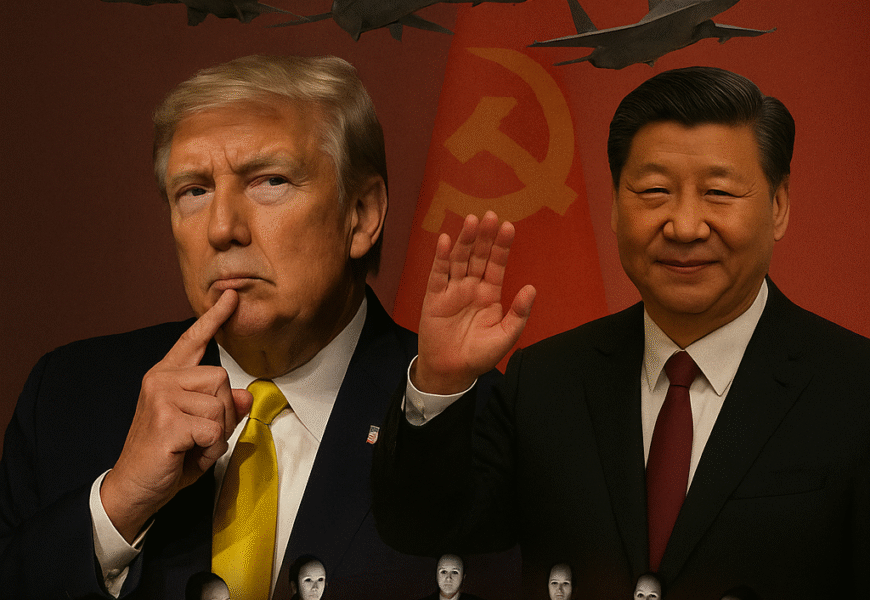
In a dramatic twist, former U.S. President Donald Trump, operating as a high-level envoy, released a formal appeal on May 10, calling for an immediate ceasefire between the two nuclear-armed neighbors. Though symbolic, the gesture underscored the urgency of de-escalation in Washington’s eyes—and hinted at America’s growing unease with China’s rising influence in the region.
A New Regional and Global Order
The 2025 Indo-Pak conflict is no longer just about territorial claims or political posturing. It has become a test case for modern warfare, narrative control, and defense diplomacy. China has emerged as a formidable force not just economically, but militarily—validated by real-world battlefield success. Meanwhile, India’s strategic overreach has exposed its vulnerabilities, both in defense doctrine and information integrity.
The West, caught between containing China and supporting its traditional ally, now faces tough questions about its role in the Global South. As financial institutions like the IMF and diplomatic figures like Trump step in to broker peace, one thing is clear: the balance of power in South Asia is shifting—and with it, the global order.


