In 2015, the signing of the Joint Comprehensive Plan of Action (JCPOA) under President Barack Obama marked a significant milestone in global nuclear diplomacy. The deal imposed strict limitations on Iran’s nuclear program in exchange for the lifting of long-standing economic sanctions. It was hailed as a pragmatic compromise that restrained Iran’s ability to develop a nuclear weapon while re-integrating it into the global economy.
However, under the presidency of Donald Trump, this carefully negotiated framework was abruptly dismantled in 2018. Trump’s decision to withdraw from the JCPOA wasn’t solely based on the deal’s technical shortcomings—it was rooted in a broader ideological and strategic realignment shaped heavily by Israeli lobbying, regional power shifts, and a hawkish American foreign policy vision aimed at total containment of Iran.
JCPOA: What Iran Gained and What the World Monitored
The JCPOA placed strict controls on Iran’s nuclear activities:
- Limiting uranium enrichment to 3.67%, well below weapons-grade level.
- Capping Iran’s enriched uranium stockpile to 300 kg.
- Restricting the number of operational centrifuges.
- Subjecting nuclear sites to IAEA inspections.
- Preventing Iran from constructing heavy-water reactors.
In exchange, Iran received:
- Lifting of UN and U.S. nuclear-related economic sanctions.
- Unfreezing of around $100 billion in overseas assets.
- Access to global markets, particularly oil exports reaching up to 2.5 million barrels per day.
- Foreign investments from major corporations like Total (France), Airbus, and Peugeot.
This financial windfall allowed Iran not only to stabilize its economy but also to modernize its military and regional posture—notably through advancements in ballistic missile and drone technology.
Trump’s “Comprehensive Deal”: Beyond Nuclear Limits
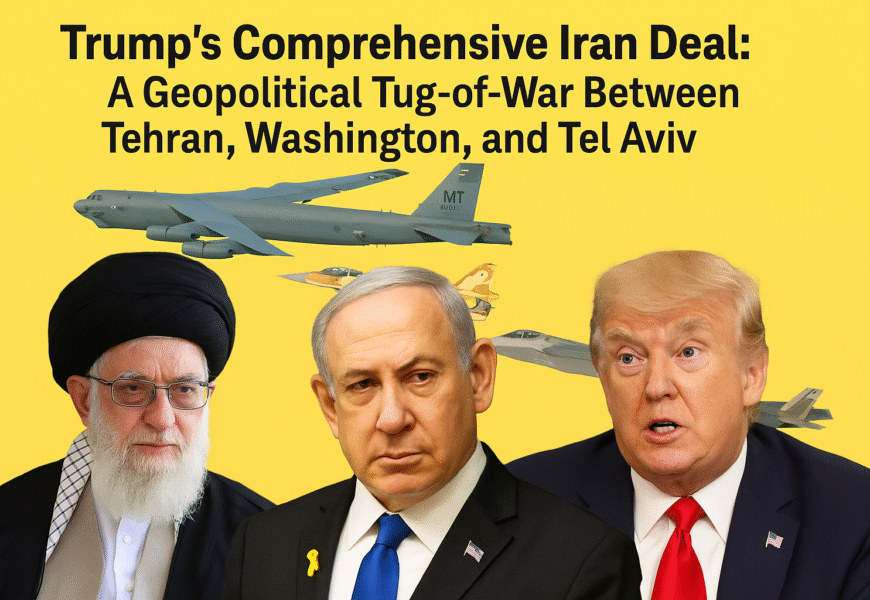
When Trump scrapped the JCPOA, he called it “the worst deal ever.” His administration claimed it failed to address Iran’s full range of threatening activities. Instead of rejoining or renegotiating the existing deal, Trump proposed an entirely new framework, often referred to as a “comprehensive deal,” which demanded:
- Permanent restrictions on uranium enrichment and full transparency.
- Complete halt to Iran’s missile program—ballistic or otherwise.
- An end to Iran’s support for regional proxies, including Hezbollah, Houthis, and Shia militias in Iraq and Syria.
- Unlimited and invasive IAEA inspections beyond nuclear facilities.
- A commitment to disengage from regional conflicts, effectively neutering Iran’s strategic reach.
In essence, Trump wanted Iranian surrender, not compromise. Unlike JCPOA, which had reciprocal obligations, the proposed deal demanded Iran’s capitulation in exchange for mere promises of sanction relief—without guarantees.
Why Iran Rejected Trump’s Vision
Iran viewed Trump’s proposal as unreasonable, one-sided, and devoid of trust, especially after the U.S. unilaterally exited JCPOA despite Iran’s verified compliance.
Key reasons for Iran’s rejection include:
- Strategic Deterrence: Its missile arsenal is a core military necessity, especially with rivals like Israel and U.S. bases surrounding it.
- Sovereignty and Dignity: Iran sees its nuclear program as a symbol of scientific progress and national pride.
- Breach of Trust: The U.S. withdrawal from JCPOA without cause made any future American guarantees seem hollow.
- New Alliances: Iran has built strategic partnerships with China and Russia, including a $400 billion long-term cooperation agreement with Beijing.
- Domestic Legitimacy: Any leader in Tehran who accepts Trump’s deal would risk political suicide amid nationalist sentiment.
Israel’s Role: Strategic Lobbying and Regional Dominance
Trump’s Iran policy cannot be understood without examining Israel’s influence:
- Tel Aviv has long viewed Iran’s rise as an existential threat, especially after the 1979 Islamic Revolution shifted Tehran from ally to adversary.
- Israeli intelligence has consistently warned that Iran’s nuclear ambitions are military in nature, despite IAEA oversight.
- Iran’s missile capability and support for Hezbollah pose a direct challenge to Israel’s security, particularly along the Lebanon and Syria borders.
Hence, Israel strongly opposed JCPOA, fearing that the lifting of sanctions would empower Iran economically and militarily.
The Israeli lobbying network—AIPAC (American Israel Public Affairs Committee) and CUFI (Christians United for Israel)—played a crucial role in aligning the U.S. Republican Party’s foreign policy with Israel’s vision. Their financial and political support helped push Trump, Vice President Mike Pence, and Secretary of State Mike Pompeo into an aggressive anti-Iran posture.
Trump Delivers for Israel: Jerusalem, Golan Heights, and More
Under Trump, Israel secured several geopolitical wins:
- U.S. recognized Jerusalem as Israel’s capital, moving the embassy from Tel Aviv (2018).
- Golan Heights was recognized as Israeli territory (2019).
- Trump supported Israel’s de facto annexation of West Bank settlements.
- Abraham Accords normalized ties between Israel and key Arab states—isolating Iran further.
In this context, the termination of JCPOA was not an isolated decision. It was part of a broader strategy to tilt the regional balance overwhelmingly in favor of Israel and contain Iran through economic isolation and military pressure.
The Paradox: How JCPOA Withdrawal Backfired
Ironically, scrapping JCPOA had unintended consequences:
- Iran resumed uranium enrichment beyond JCPOA limits—exceeding 60% purity in some cases.
- IAEA oversight weakened, reducing international visibility into Iran’s nuclear progress.
- Regional tensions spiked, with attacks on Gulf oil tankers, Saudi Aramco facilities, and U.S. assets in Iraq.
- Iran doubled down on building missiles and drones, now exporting them to allies like Russia and non-state actors.
- China and Russia filled the vacuum, drawing Iran into multipolar alliances that weakened U.S. leverage.
Iran Today: A Rising Regional Power
Iran today is not the same geopolitical orphan it was two decades ago. It now:
- Commands economic resilience through oil-for-goods barter with allies.
- Has become a regional drone and missile powerhouse.
- Participates in BRICS and the Shanghai Cooperation Organization.
- Maintains influence across Iraq, Syria, Lebanon, and Yemen—forming what strategists call the “Shia Crescent.”
With this strategic depth, Iran sees little value in re-entering a deal designed to strip it of its defense and diplomatic leverage.
Conclusion: Containment Dreams vs. Strategic Reality
Trump’s “comprehensive deal” was less a treaty than an ultimatum, designed to serve Israel’s long-standing desire to contain Iran by all means. While it achieved short-term goals—reasserting U.S.-Israeli alignment and isolating Iran diplomatically—it backfired by accelerating Iran’s nuclear and military advancements without oversight.
For Israel, Iran’s rise remains deeply unsettling. For Iran, any deal must now respect its regional stature, technological achievements, and sovereign pride. The age of Western-imposed red lines on Iran seems to be over—and any future deal will likely need to be negotiated on equal terms, not dictated from Washington or Tel Aviv.