
Indian Media’s Great-Power Illusion Cannot Substitute for Economic, Technological, and Indian Ocean Influence
When Domestic Protests Become Geopolitical Narratives
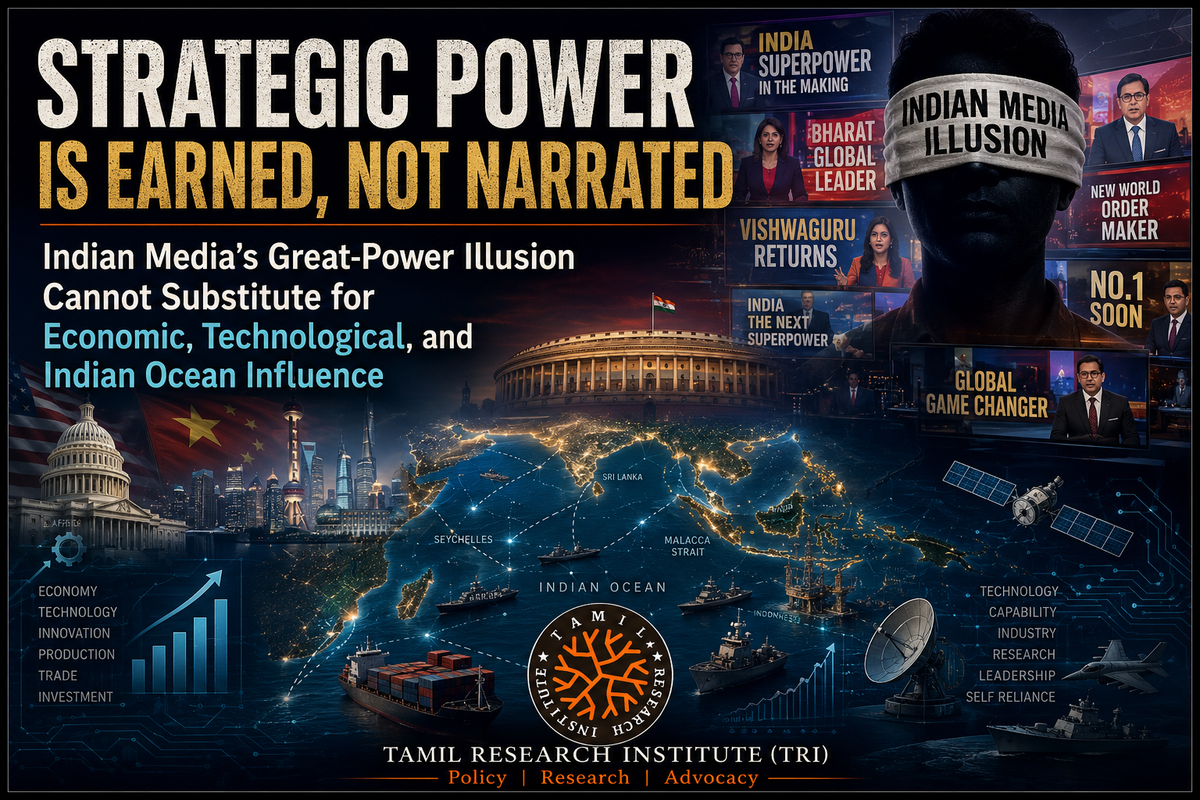
Following the recent student protests across India, sections of India’s television media have advanced a new geopolitical narrative. According to this interpretation, the demonstrations are not merely domestic protests over education policy or governance but part of a broader foreign strategy to obstruct India’s rise as a maritime power. Some commentators have linked the protests to the Great Nicobar Project, India’s strategic location near the Malacca Strait, and Prime Minister Narendra Modi’s recent diplomatic visits to Seychelles and Indonesia.
While these arguments resonate with nationalist audiences, they deserve to be examined through strategic analysis rather than political rhetoric.
Maritime Power Cannot Be Built Through Symbolism Alone
The first question is whether domestic student protests can realistically alter the strategic balance in the Indian Ocean. History suggests otherwise.
Maritime influence has never depended on a single infrastructure project, one diplomatic visit, or one domestic political movement. It is built over decades through sustained economic growth, industrial capacity, technological innovation, naval modernization, financial influence, and trusted regional partnerships.
The United States continues to shape the global maritime order through unmatched naval reach, technological leadership, and the central role of the U.S. dollar in international finance. China has spent more than two decades expanding its strategic footprint through manufacturing, infrastructure financing, global trade, and the Belt and Road Initiative.
India has undoubtedly strengthened its maritime posture in recent years. However, its economic scale, industrial base, research ecosystem, overseas investment capacity, and technological capabilities remain significantly smaller than those of both the United States and China.
The Great Nicobar Project Is Only One Piece of a Larger Strategy
The Great Nicobar Project has genuine strategic importance for India’s maritime security and commercial connectivity. It has the potential to improve logistics and surveillance near one of the world’s busiest shipping corridors.
However, no single infrastructure project fundamentally changes the geopolitical balance in the Indo-Pacific.
Major powers establish influence through decades of sustained investments in technology, shipping, finance, research, education, defense manufacturing, and diplomatic engagement—not through one port or one naval facility.
Diplomatic Visits Are Important, But They Do Not Define Regional Leadership
The recent visits by Prime Minister Narendra Modi to Seychelles and Indonesia represent positive diplomatic engagement. Yet diplomacy is measured by long-term outcomes rather than symbolic appearances.
Regional influence is ultimately determined by the willingness of neighbouring countries to deepen economic partnerships, security cooperation, infrastructure connectivity, technology transfer, and institutional collaboration.
One successful diplomatic visit cannot compensate for structural economic limitations or alter the strategic calculations of an entire region.
The Indian Ocean Is Increasingly an Arena of Economic Competition
Modern geopolitics is increasingly driven by economics rather than geography.
China has steadily expanded its influence across the Indian Ocean through large-scale investments in ports, highways, industrial parks, energy infrastructure, digital connectivity, and development financing. These investments have significantly increased Beijing’s presence across South Asia, Southeast Asia, East Africa, and the Middle East.
The United States maintains influence through global financial institutions, advanced technology, military alliances, multinational corporations, and a worldwide logistics network.
India has strengthened its regional engagement through initiatives such as SAGAR, humanitarian assistance, and security partnerships. However, compared with the economic resources, technological capacity, and financial leverage available to Washington and Beijing, New Delhi continues to operate with comparatively more limited resources.
Regional Relationships Remain a Strategic Challenge
Geography alone does not guarantee geopolitical influence.
Several countries in India’s immediate maritime neighbourhood—including Sri Lanka, Bangladesh, the Maldives, Malaysia, and Pakistan—have, at various times, experienced diplomatic friction or pursued foreign policies that balance relations among multiple major powers, including China.
China’s growing trade relationships, infrastructure investments, and financial engagement have expanded its influence across much of the Indian Ocean region. While each country’s foreign policy is shaped by its own national interests, the broader trend illustrates that economic partnership often translates into strategic influence.
If India seeks long-term leadership in the Indian Ocean, strengthening trust, expanding investment, improving regional connectivity, and building durable economic partnerships will likely matter more than symbolic diplomacy or media narratives.
An Internal Contradiction in the Narrative
Perhaps the most striking weakness in the current television narrative is its internal inconsistency.
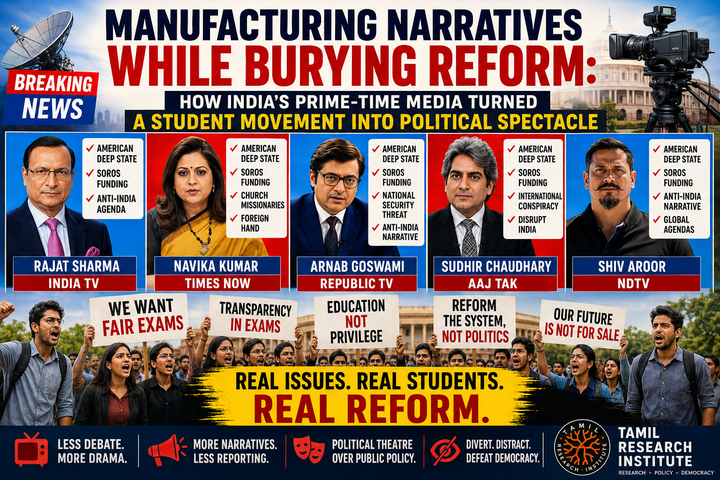
Some commentators argue that the protests are supported by the United States, while others attribute them to China, George Soros, foreign NGOs, or a broader international conspiracy.
These explanations raise important analytical questions.
The United States and China are strategic competitors pursuing different objectives across the Indo-Pacific. Any assertion that both are simultaneously directing the same domestic protest movement would require substantial evidence.
Without such evidence, these competing narratives remain speculative rather than analytical.
Policy Debate Should Not Be Replaced by Political Spectacle
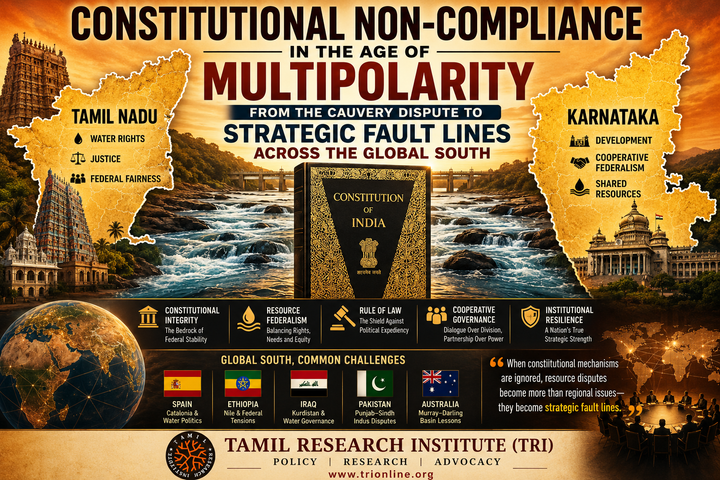
The issues raised by many students concern education policy, examination integrity, governance, and the balance of power between the Union and the States.
Whether one agrees or disagrees with these demands, they remain constitutional questions deserving public debate.
When discussions about decentralization, educational reform, or federalism are immediately reframed as foreign conspiracies, the opportunity for meaningful democratic engagement becomes increasingly limited.
As India approaches the centenary of its independence, its long-term influence will depend less on television narratives and more on measurable national capabilities.
Economic productivity, technological innovation, industrial competitiveness, educational excellence, institutional credibility, cooperative federalism, and trusted regional partnerships will determine whether India emerges as a leading Indo-Pacific power.
Great powers are respected not because they claim influence, but because they consistently demonstrate it.
Strategic Power Is Earned, Not Narrated
The Indian Ocean will not be shaped by media debates alone.
It will be shaped by economic strength, technological leadership, diplomatic credibility, institutional resilience, and the confidence neighbouring countries place in India’s long-term partnership.
Domestic policy debates deserve to be addressed on their own merits. Recasting every constitutional disagreement as the work of external actors may generate compelling television narratives, but it does not resolve the underlying policy questions.
As India approaches 100 years of independence, its greatest strategic test may not be countering external rivals—it may be strengthening the democratic institutions, federal balance, and regional partnerships that sustain national cohesion.

Comments ()